I wanted the icon designs to feel familiar and easily recognizable, while creating a flexible wayfinding system suited for outdoor use. The concept draws inspiration from elements associated with movies and theatres.
Rendez-Vous Québec Cinéma
Wayfinding
Founded in 1982, the Rendez-Vous Québec Cinéma is a 9-11 days film festival that was created to celebrate the cinematography production of Quebec and is recognized as the largest local film festival in the world, promoting the cinema of Quebec and its makers to support the culture and simulate its industry. This festival brings together the works of newcoming and established filmmakers, presenting nearly 200 films of a wide range of genres and cinematic approaches to a diverse audience.

The brief was to design a wayfinding system for the 44th edition of the Rendez-vous Québec Cinéma festival at Place des Arts in Montreal’s Quartier des Spectacles, helping visitors easily navigate the outdoor screening spaces and festival areas.
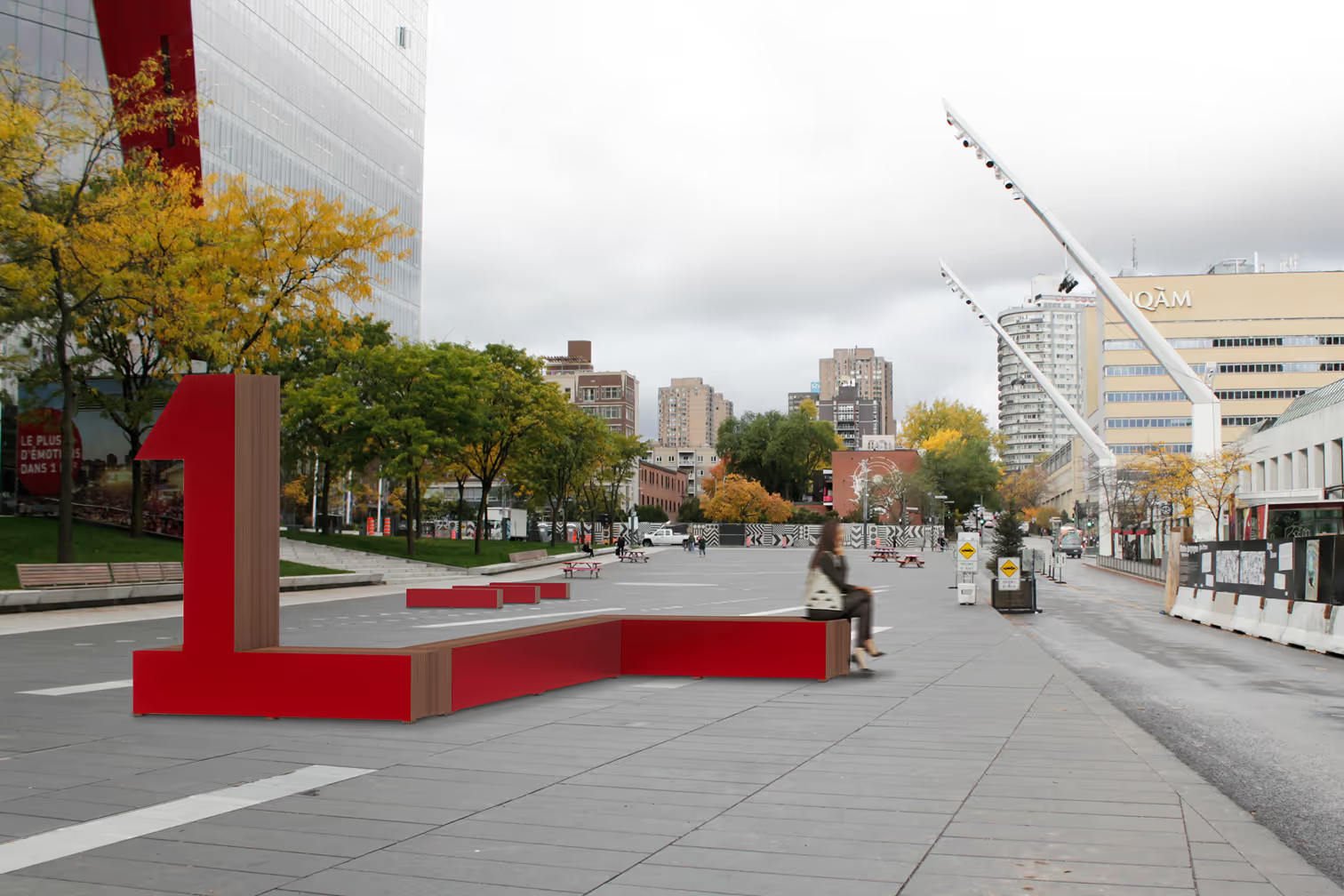
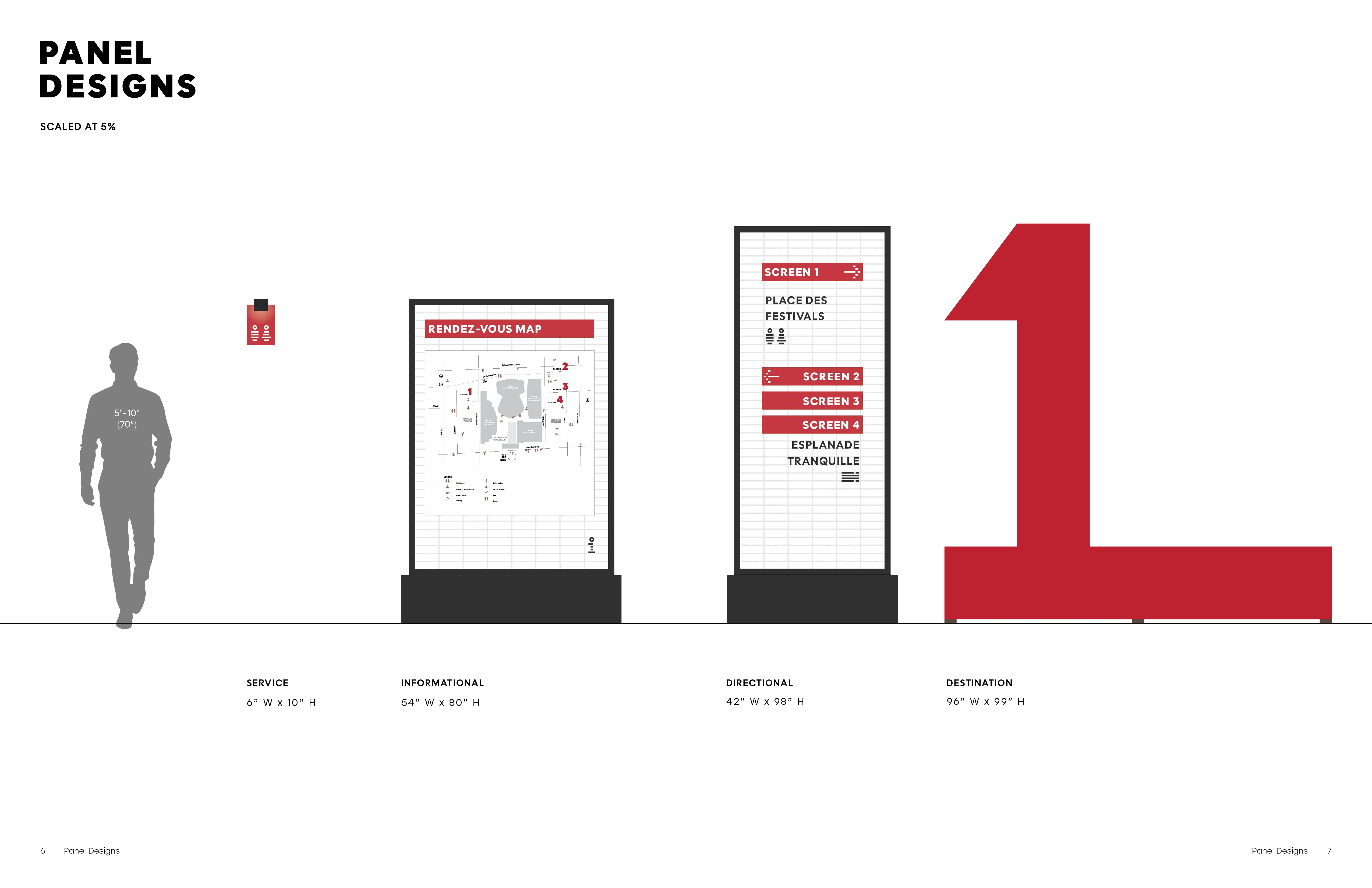
Since the film screenings take place outdoors, the wayfinding system was designed to be modular while also functioning as urban furniture. The destination signage takes the form of numbered benches, finished with a bright red laminate to stand out, allowing festival attendees to easily identify which screening area they are in. Designed as a modular system, the furniture can be arranged by organizers to shape the layout of each screening space, serving both as rest areas and informal seating for viewers.


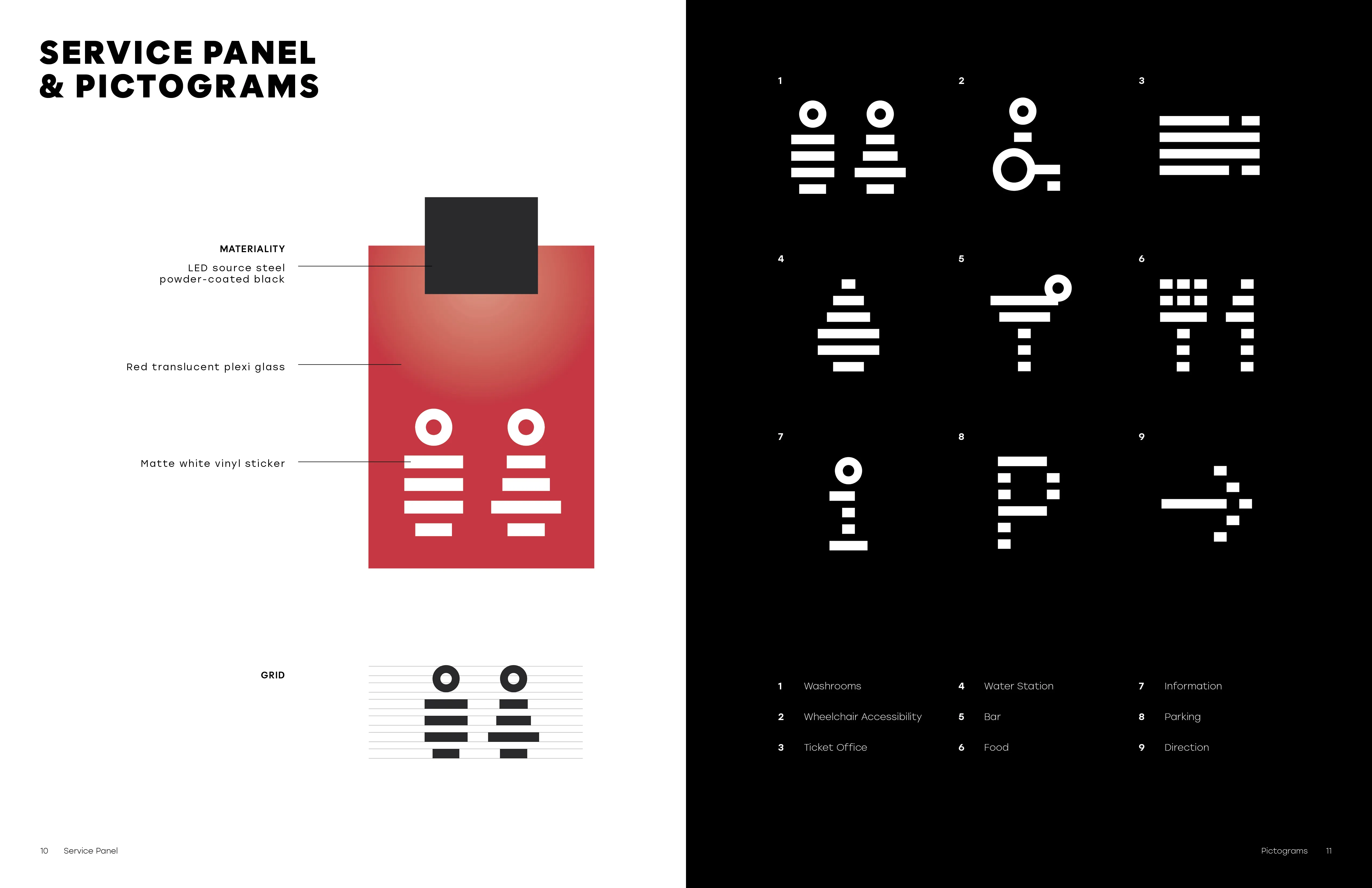
Québec Cinéma uses bold horizontal black lines as part of its branding, representing the black bars seen on a screen when watching a movie. For the new wayfinding system icons, I used a similar typeface and horizontal lines to emulate the same visual language as the existing branding and build upon a consistent theme.
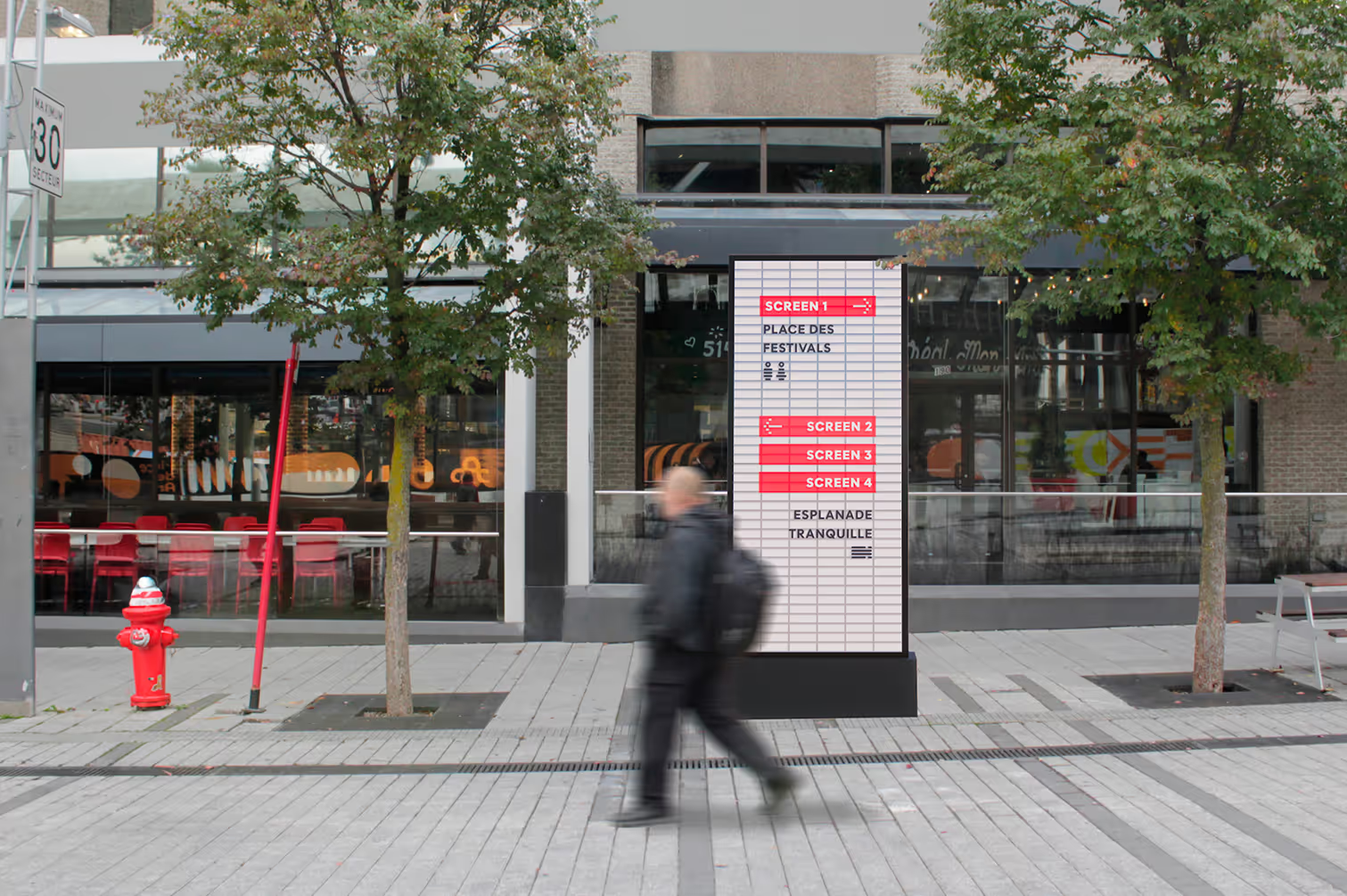
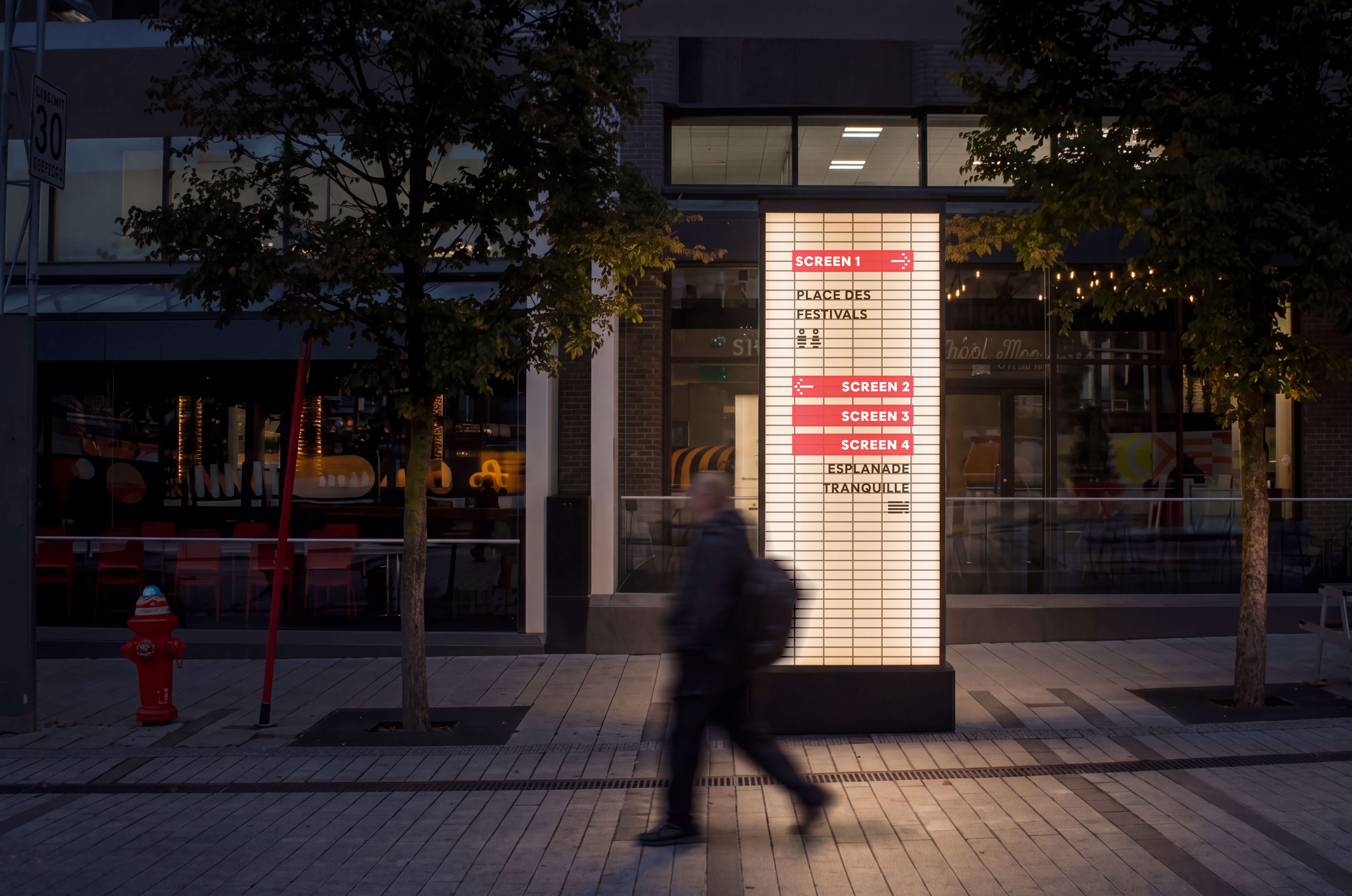
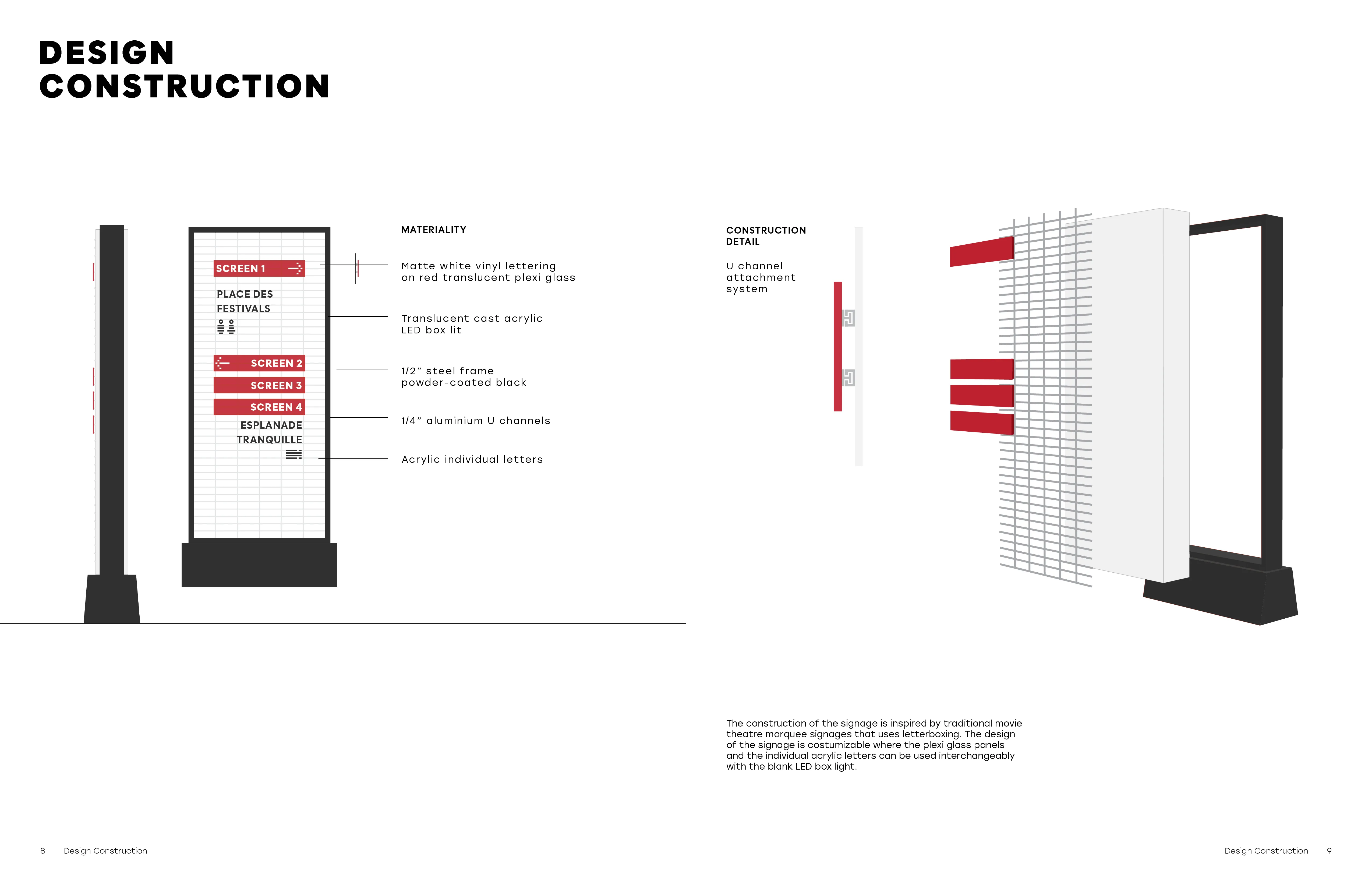
The directional signage draws inspiration from traditional movie theatre marquees while mirroring the project’s theme of horizontal lines. Designed as a lightbox with a gridded surface for nighttime visibility, the signage system is customizable, allowing different information panels, letters, and icons to be easily switched in and out. The interchangeable panels are made from translucent red acrylic with matte white vinyl text, creating depth and transparency while allowing the lightbox to softly shine through.

credits
typeface
photography
mockups
Polymath Display
Juliana Wu
Juliana Wu
AI generation
Publication
Branding
Promotional
Publication
Wayfinding
Packaging